
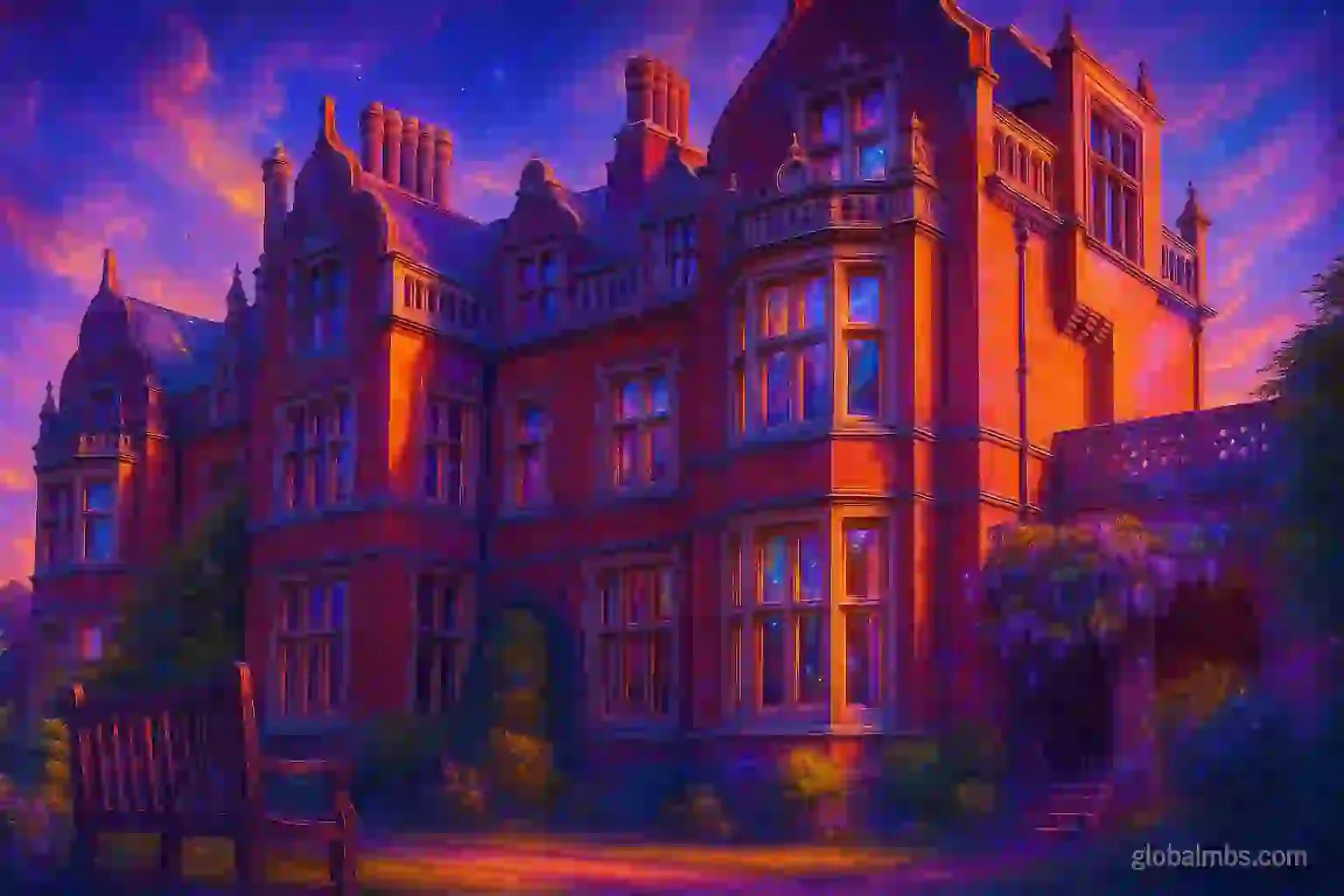
Arthur Findlay College at Stansted Hall, Stansted Mountfitchet
Arthur Findlay College, Stansted Hall and Stansted Mountfitchet
Arthur Findlay is the name most closely associated with Stansted Hall in Stansted Mountfitchet, the historic Essex estate that now houses Arthur Findlay College. What began as a private country residence has become one of the world’s leading centres for Spiritualist education and psychic science, attracting students and visitors from across the globe.
Stansted Hall sits just outside the village of Stansted Mountfitchet, surrounded by parkland, mature trees and a sense of seclusion that feels a world away from nearby transport links. This setting gives the college a quiet, reflective atmosphere within easy reach of the wider world.
At the heart of it all lies Arthur Findlay’s vision. He believed that Spiritualism should be investigated, understood and taught in a structured way, not left to chance or purely informal circles. To secure that future, he chose Stansted Hall as the physical base and worked with the Spiritualists’ National Union – often known simply as the Spiritualists Union (SNU) – to ensure the estate would be protected and used for Spiritualist education long after his death.
Today, Arthur Findlay College is the living expression of that plan: a residential college where people can explore mediumship, spiritual healing, philosophy and psychic development in a setting shaped both by history and intention. To understand how this came about, we need to look first at the man behind the vision.
Arthur Findlay: The Builder Behind the Vision
From Finance to Faith: How Arthur Findlay Changed Direction
Before his name became synonymous with Stansted Hall and Spiritualism, Arthur Findlay lived a very different kind of life. He built his career in finance as an accountant and stockbroker, learning the disciplines of money, planning and long-term thinking.
In 1923, two major changes happened together: he retired from business and bought Stansted Hall, a substantial estate in Stansted Mountfitchet. This was not an impulsive act funded by mystery; it was the decision of a successful professional investing the capital he had accumulated over a working lifetime. The hall was, at that point, a family home designed for country living, not a college.
Around this time and into the following decades, Findlay’s interest in Spiritualism deepened. He engaged with séances seriously, particularly through sittings with the direct-voice medium John Campbell Sloan. His published investigations show a man who wanted Spiritualism to be examined and explained, not taken on blind faith; for an example, see An Investigation into Psychic Phenomena (1924). His later work continued that drive to describe what he believed was happening and why; for a wider statement of his framework, see On the Edge of the Etheric.
Business Logic, Spiritual Aim: Why Continuity Mattered
The dual background of businessman and Spiritualist is crucial. Arthur Findlay brought the mindset of a planner and builder into his spiritual life. He treated Spiritualism as a subject that needed structure if it was going to endure.
Instead of relying on books alone, he began to think in terms of infrastructure:
- Where could Spiritualism be taught in a serious, systematic way?
- How could he ensure that work would continue after he was gone?
- What would stop the whole thing from being lost to chance or neglect?
The answer he shaped over time was Stansted Hall itself. By turning his home into a dedicated college, he could give Spiritualism a permanent base – a place for courses, archives, teaching and development. That idea would later come to life as Arthur Findlay College, under the guardianship of the Spiritualists Union (SNU).
Stansted Hall and Stansted Mountfitchet: An Essex Estate with a New Purpose
From Country House to Spiritualist Landmark
Before it became a Spiritualist landmark, the grounds of Stansted Hall already carried centuries of English estate history. The College’s own historical framing places the locality in the world of the Mountfitchet barons, tying Stansted’s land story to the wider medieval landscape associated with Runnymede and the Magna Carta era. Heritage notes for the site add that the Victorian hall stands on ground that previously held Tudor and Jacobean halls, so the “Stansted” in Arthur Findlay’s story is a place with older architectural layers beneath it. By the late 1700s, the estate also fits the Georgian fashion for planned landscapes, with later summaries recording designs by Humphry Repton in 1791.
Today’s Stansted Hall was built in the nineteenth century in a Jacobean-inspired style. It stands back from the road at the end of a sweeping drive, surrounded by formal and informal grounds. It was created as a substantial family residence – large rooms, corridors, guest bedrooms and social spaces – meant for extended stays rather than quick visits.
When Arthur Findlay purchased the hall in 1923, he acquired not just bricks and mortar but space:
- Space for large gatherings, classes and services
- Space for students and guests to stay on site
- Space for quiet reflection in gardens and woodlands
These features turned out to be ideal for a residential college, even though the building’s original designers never imagined that use. Over time, the phrase “Stansted Hall” shifted meaning. Within Spiritualist circles, it no longer referred simply to a country house; it became shorthand for a worldwide centre of learning and development.
During WWII, Stansted Hall was loaned to the Ministry of Defence for Red Cross use as a convalescent hospital, with the College later recording that around 5,500 recovering soldiers recuperated there.
Why Stansted Mountfitchet Was the Right Setting for a College
The location in Stansted Mountfitchet adds another layer. The village carries a sense of “old England” in its lanes, cottages and local history, yet it sits close to major roads, rail links and, in modern times, an international airport.
For a residential college drawing students from across the UK and overseas, this combination is powerful:
- Easy to reach, yet
- Quiet enough to feel set apart from everyday pressures
Students arriving at Stansted Mountfitchet can step out of trains or cars into a place that still feels like a village, then travel a short distance further to reach Stansted Hall, where the atmosphere shifts again into the focused calm of a working spiritual college. That geography has helped Arthur Findlay College become both internationally accessible and locally grounded.
The Spiritualists’ National Union (SNU): A Partnership That Changed Stansted Hall
Who Are the Spiritualists Union?
The Spiritualists’ National Union – often shortened in everyday speech to the Spiritualists Union or simply SNU – is one of the key organisations within British Spiritualism. It links churches, individual members, ministers, and affiliated centres under a shared structure and set of principles.
The SNU operates as a charitable body with defined governance, providing:
- A national framework for Spiritualist churches
- Formal recognition of ministers and officiants
- Educational pathways and awards
- Oversight for properties and centres such as Arthur Findlay College
For Arthur Findlay, this organisation offered something vital: a trustworthy, structured body that could own and manage Stansted Hall in perpetuity, using it to advance Spiritualism and psychic science rather than allowing it to disperse or change purpose.
Shared Purpose: From Private Estate to Public Mission
Once Findlay decided that Stansted Hall should become a Spiritualist college, he needed more than enthusiasm. He needed a partner capable of handling legal ownership, ongoing upkeep and educational programming. The SNU became that partner.
Over time, he worked with successive SNU leaders to shape a bequest that would:
- Transfer the hall and its grounds to the SNU
- Provide an endowment to support maintenance and college work
- Protect the estate from being sold or diverted to other uses
What emerged was not just a gift of property, but a joint project:
- Arthur Findlay supplied the building, land and funds.
- The Spiritualists Union (SNU) supplied governance, doctrinal framework and organisational continuity.
Together, they created the conditions for a college that could outlive its founder.
Four Key Dates: How Stansted Hall Became Arthur Findlay College
1923: Purchase and Retirement to Stansted Hall
In 1923, Arthur Findlay retired from his financial career and bought Stansted Hall. At this stage, the hall functioned as a private residence. Yet the decision placed a major estate in the hands of someone already deeply engaged with Spiritualism and concerned about its long-term future. That combination set the stage for everything that followed.
1945: Proposing a Spiritualist College in Stansted Mountfitchet
By 1945, after years of writing, investigation and public work on Spiritualism, Findlay moved from private conviction to public proposal. He put forward the idea of establishing a Spiritualist college at Stansted Hall in Stansted Mountfitchet.
This moment marks the shift from house to institution. A college implies:
- Regular teaching
- A developing curriculum
- A long-term commitment to archives, training and stewardship
From then on, Stansted Hall was no longer just a home; it was a planned centre of Spiritualist education.
1954: Bequest and Endowment Accepted by the SNU
In 1954, the Spiritualists’ National Union formally accepted Arthur Findlay’s proposed bequest of Stansted Hall with an endowment. The endowment is crucial. Many buildings have been donated to causes only to fall into disrepair because there was no provision for ongoing costs. By attaching funds to the hall, Findlay increased the chances that his college would be viable in practical terms: heating, repairs, staff and programme costs.
1964: Transfer, Completion, and the Founder’s Death
In 1964, Arthur Findlay completed the transfer of Stansted Hall, its grounds and the endowment to the SNU. Later that year he died, a year after the death of his wife. The timing underlines the thoroughness of his planning: the legal and financial arrangements were complete while he was still alive, leaving as little as possible to chance.
These four dates – 1923, 1945, 1954 and 1964 – sketch the arc of the story: from purchase, to proposal, to agreement, to completion. They show how careful planning turned a personal estate into the secure base for Arthur Findlay College.
Inside Arthur Findlay College Today
Courses, Residential Weeks and Daily Life at the College
Today, Arthur Findlay College is widely described as a residential college for the advancement of Spiritualism and psychic science. In practical terms, this means that:
- Students book residential weeks or shorter courses at Stansted Hall.
- Accommodation, meals and teaching are usually all on site.
- Days are structured around lectures, practical sessions, tutorials and services.
Core subjects often include:
- Mediumship development
- Spiritualist healing
- Meditation and spiritual development
- Spiritualist philosophy and platform work
- Trance and altered-state work (depending on the course)
The fabric of Stansted Hall supports this rhythm. Large rooms become lecture and practice spaces; the sanctuary hosts services and demonstrations; smaller rooms support tutorials and circles; and the grounds give students places to walk, reflect and reset between sessions.
What Students Actually Do at Arthur Findlay College
A typical course at the college might involve:
- Morning lectures on philosophy, the mechanics of mediumship or the ethics of practice
- Small group sessions where students practise communication, platform work or healing under tutor guidance
- One-to-one or small tutorials where individuals receive feedback on their development
- Evening services or demonstrations in the sanctuary, giving opportunities to witness or take part in Spiritualist services
Some courses are aimed squarely at beginners, offering a first structured introduction to Spiritualist ideas and practices. Others are designed for experienced mediums, healers or circle leaders who want to refine their skills, explore a new area or prepare for formal SNU awards.
For many visitors, the strongest impact comes not from a single event but from the immersion: several days of learning, practice, reflection and shared experience within the same hall that once served as Arthur Findlay’s home.
The College Opening and How Stansted Adjusted
After the transfer of the hall to the SNU and the practical preparations, Arthur Findlay College opened as a working residential college in the mid-1960s. Dedication services and early courses drew significant numbers, marking the end of the transition from private estate to public institution.
Over time, Stansted Mountfitchet adjusted. The hall became part of the village’s identity: a large, prominent building slightly apart from everyday life yet constantly bringing new faces into local shops, roads and public spaces.
From Essex to the World: How Influence Flows Outward
Overseas and Translated Residential Weeks
The influence of Arthur Findlay College is not limited to the UK. Its programme has included overseas and translated residential weeks, showing how international the demand for Spiritualist education has become.
Examples include weeks focused on:
- Italian-speaking students
- Swiss-German-speaking students
- French-speaking students
In these programmes, teaching is delivered with translation or in the students’ native language, allowing people from other countries to engage fully with the material while living and studying at Stansted Hall. You do not create such courses unless there is a steady flow of international students; the calendar itself becomes evidence of global reach.
Tutors, Alumni and the Spiritualist Church Circuit
The influence of the college continues after students leave Essex. Tutors and alumni associated with Arthur Findlay College often travel widely, serving Spiritualist churches and public venues.
Mediums and tutors with college links may:
- Demonstrate mediumship at Spiritualist churches in the UK and abroad
- Take part in larger events at civic halls and theatres
- Support training and development in local circles
Living examples on the circuit: Debra Chalmers (church services diary) and Tony Stockwell (events calendar) show how working mediums and tutors move between churches, venues, and teaching spaces.
In this way, the college acts as a hub: training and inspiring people at Stansted Hall, who then carry that knowledge back to their home communities and countries. The network of churches, centres and events becomes a living extension of the work done in Stansted Mountfitchet.
Exploring Spiritualism for Yourself
Local Spiritualist Churches as a First Step
You do not have to travel immediately to Stansted Mountfitchet to begin exploring Spiritualism. For many people, the first step is attending a service at a local Spiritualist church or centre.
A typical service may include:
- An opening address or talk on Spiritualist philosophy or life issues
- A period of Spiritualist healing
- A demonstration of mediumship
- Quiet moments for personal reflection or prayer
Church programmes often list visiting mediums, special demonstration services and development circles. Attending a few services can give you a feel for the atmosphere, values and practices of Spiritualism in a gentle, local setting.
The Arthur Findlay Legacy
Arthur Findlay’s name is attached to a hall, a college and a series of books, but his deeper legacy is a pattern:
- Place – securing Stansted Hall in Stansted Mountfitchet as a permanent home for Spiritualist education.
- Structure – designing with the Spiritualists Union (SNU) a legal and financial framework that could keep the college running responsibly.
- Continuity – insisting that Spiritualism should be investigated, taught and handed on, not left to fade at the edges of public life.
Today, when students arrive at Arthur Findlay College, they walk into a living continuation of that work. They study in rooms once used as a family home, attend services in a sanctuary created for Spiritualist worship and exploration, and meet tutors whose own development has often been shaped by the college itself.
Whatever your personal beliefs about Spiritualism, one fact remains clear: instead of leaving behind only words, Arthur Findlay left behind a working institution – Stansted Hall as Arthur Findlay College – where people still come, decades later, to learn, to question and to grow.

